Weekly Newsletter, 6.16.26
A lot has happened since my last newsletter, so I will get right down to it!
On Sunday, Iran and the United States reached a deal to extend the war and reopen the Strait of Hormuz. Details have not been released, but U.S. and Iranian officials expect to sign an agreement Friday, with negotiations thereafter to begin over Iran’s nuclear program. This comes after the House passed a bipartisan War Powers Resolution to end hostilities absent Congressional approval. I voted yes. The Senate passed its own version on May 19th.
As I shared with CNN News Central, I am glad to see hostilities end, but the U.S. has nothing to show for the President’s war of choice in Iran but a younger, more radical and more militantly extreme regime that has proven its ability to disrupt trade by closing the Strait of Hormuz, cost the lives of 13 killed servicemembers, and caused average gas prices to skyrocket over $4 per gallon compared to under $3 per gallon before the war.
On Friday, Section 702 of the Foreign Intelligence Surveillance Act after the House failed to pass a bill to extend it another three weeks. As I discussed with Rev. Al Sharpton on PoliticsNation, I voted no because it failed to include any reforms to prevent the federal government from spying on U.S. citizens in violation of their Fourth Amendment rights, amidst concerns over President Trump’s unqualified choice as acting Director of National Intelligence.
Last week, House and Senate Republicans passed their partisan funding bill to give ICE and Border Patrol another $70 billion to continue their overly aggressive mass detention and deportation campaign, on top of the nearly $200 billion from last year’s Big Ugly Law. I voted no because Republicans still refuse to hold ICE and Border Patrol agents to the same standards as other law enforcement to protect our civil liberties.
Back in the district, I joined Senator Mark Warner (D-VA) to present $850,000 in community project funding for the City of Richmond to improve stormwater management infrastructure in Shockoe Valley and the Shockoe Project. We also met with area businesses to discuss how federal, state and local officials can partner to support economic and cultural development in this oldest part of the City of Richmond.

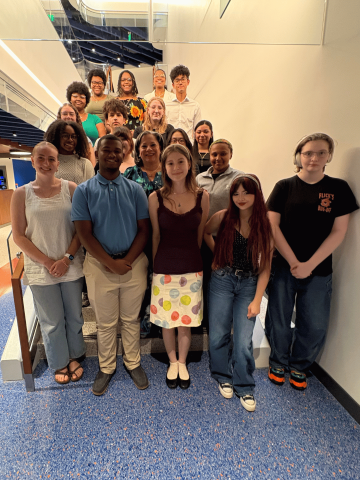
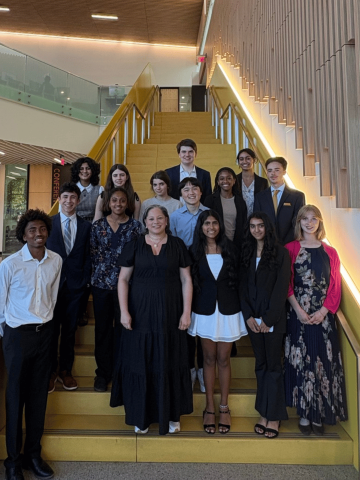
I also celebrated district students who participated in the annual Congressional Art Competition and met with my 2025-2026 Youth Advisory Council for their final meeting to answer their questions and hear their policy recommendations.
Keep reading to see what else you may have missed since my last newsletter.
DISCHARGE PETITIONS FORCE THE “DO NOTHING CONGRESS” TO DO SOMETHING
In 1948, President Harry Truman grew so frustrated with the Republican-controlled 80th Congress blocking his legislative agenda that he dubbed it the “Do Nothing Congress.”
The 119th Congress has since earned the title. Between Speaker Johnson refusing to bring bipartisan bills to the floor for a vote to his inability to hold his caucus together to pass the rules governing floor consideration of others, the 119th Congress set a record in 2025 for the fewest bills passed in a year (38) and has only enacted 100 bills thus far.
Even Republicans are frustrated by the gridlock.
Increasingly, House Republicans have joined House Democrats to act through the discharge petition, a procedure in which 218 members of the House can force a bill to bypass committee and come directly to the floor for a vote. Once exceedingly rare, they have become more common — and successful — under Speaker Mike Johnson.
We saw this when a few House Republicans joined House Democrats to sign a discharge petition compelling the release of federal files related to Jeffrey Epstein last year, and when the same thing happened for a vote on extending enhanced premium tax credits under the Affordable Care Act by three years.
Now in 2026, we’re seeing House Republicans continue to lean on discharge petitions in defiance of Speaker Johnson’s unwillingness to get things done. Last week, 20 Republicans joined Democrats in the House to pass the Faster Labor Contracts Act to accelerate contract negotiations between newly-unionized workers and management. It serves as proof that bipartisanship isn’t entirely dead, even if Speaker Johnson and other members of Republican leadership work to further divide us.
Now, we have another opportunity to get important work done with Rep. Lizzie Fletcher’s (TX-07) discharge petition for the Right to Contraception Act. The bill would create a federal right for people to obtain contraceptives and establish a right for health care providers to provide contraceptives and information related to contraception. This is broadly popular with the American people and should not be controversial — even if opponents to reproductive freedom say otherwise.
In Virginia, we passed a Right to Contraception Act that was signed into law just this April. It’s past time for the federal government to do the same. I joined Americans for Contraception, Birth in Color RVA, Planned Parenthood Advocates of Virginia and storytellers to share my experience with contraception and stand up for reproductive freedom and the right for people to decide on their own terms when, whether and how to become a parent.
ENERGY & COMMERCE COMMITTEE UPDATE
As a member of the Energy & Commerce Committee, I have focused on addressing energy, environmental, communications, technology and health care issues over the past few weeks.
The Communications & Technology Subcommittee held a hearing focused on positioning, navigation, and timing (PNT) in the United States, which allows easy access to real-time location information to help operate vehicles, devices and national defense systems.
During the hearing, I paid tribute to Dr. Gladys West, a “Hidden Figure” from Dinwiddie County whose pioneering mathematical models of the Earth’s shape and gravity laid the foundational framework allowing satellites to calculate position, navigation and timing data with extreme accuracy. Today, the Global Positioning System (GPS) is the United States’ primary source of PNT data and information. Attempts by malign actors to disrupt, jam and spoof GPS signals underscore the need for more resilient positioning, navigation and timing capabilities, but federal reviews of any GPS alternatives must be transparent, technically sound and fair.
During the Energy Subcommittee’s hearing on nuclear permitting reform legislation, I highlighted how the Trump Administration’s actions threaten the independence of the Nuclear Regulatory Commission and jeopardize projects currently in the works. We must invest in a well-regulated nuclear energy sector if we hope to advance an energy strategy that supports true American energy independence, while keeping us protected from nuclear risks impacting public health and safety.
I also joined the Sierra Club’s Beyond Coal campaign to oppose the EPA’s efforts to roll back coal ash regulations. The waste produced by coal-fired power plants, coal ash contains a concentrated mix of toxic heavy metals and minerals, radioactive elements and other carcinogens. Coal-fired power plants store these wastes in coal ash ponds, over 90% of which are unlined, causing the toxins to seep into groundwater and aquifers. These toxins have potentially devastating effects on the people who work and live near these sites: headaches, dizziness, nausea and vomiting, but also certain types of cancer and damage to the liver, kidneys, brain and more over time.
The Chesterfield Power Station in Chester contains the largest coal ash ponds in Virginia, holding about 15 million tons of unlined coal ash in unlined ponds.

I then joined the Climate Action Campaign for a roundtable on the impact of climate change and extreme weather on public health, where I discussed my resolution to acknowledge and address the threat extreme weather poses to children’s health and well-being. I also toured the Museum of Unnatural Disasters, which highlights the rising cost of climate change in an immersive exhibit that brought survivors of wildfires, floods, and extreme heat to Washington, DC.
MY BRIGHT SPOT: LATEST EPISODE OF MOMENTS WITH MCCLELLAN
My May episode of Moments with McClellan featured Rep. Brad Schneider (IL-10), the Chair of the New Democrat Coalition! Watch the full episode below to learn more about his triumphant comeback story to Congress, his love for saltwater fish and more.
REMINDERS
Applications are open through Friday, October 30th for Service Academy Nominations!
Stay tuned for more updates and keep the faith, friends!