President Trump’s war in Iran continues as the tenuous ceasefire deal reached last week unravels, the Strait of Hormuz remains blocked and gas and diesel prices remain high. The President continues threatening to commit war crimes when not focused on his White House ballroom project and midterm fundraisers while Pentagon officials threaten Pope Leo for raising concerns over Trump’s threats that a “whole civilization will die” if Iranian leaders do not do his bidding.
This extremely unpopular war continues to impact the American people, as gas prices rise by more than 80 cents a gallon in the last month in Richmond alone. Inflation sits at a two-year high, with consumer prices increasing 3.3% since this time last year.
I shared my views on the war in Iran on PoliticsNation and The Hill.
History demonstrates that peace cannot be achieved through violence and threats of annihilation, but through good faith diplomacy and the rejection of unchecked executive power. I voted in support of a War Powers Resolution to bring this madness to an end, but the vote failed largely along party lines.
Meanwhile, Speaker Johnson continued to demonstrate an inability to corral his caucus to vote on must-pass legislation. For 66 days, the Department of Homeland Security has gone unfunded, even though Speaker Johnson pledged to pass a unanimous Senate funding bill covering all agencies except ICE and Border Patrol that he led House Republicans to reject. And just days before the expiration of Section 702 of the Foreign Intelligence Surveillance Act, he delayed votes, then dropped a five-year extension with no meaningful reform in the dead of night, only to have it fail in a 2 AM vote. I voted no because any extension must include reforms to protect constitutional rights and address abuses by government officials highlighted by Senator Ron Wyden (D-OR). The House then passed a two-week extension to allow further negotiations.
In the midst of chaos, I met with community and local government leaders in the district to bring their perspectives back to Washington and spent a busy legislative week digging into the President’s proposed Energy Department budget and addressing the maternal health crisis during Black Maternal Health Week.
Keep reading to learn what else you may have missed since my last newsletter.
CONSTITUENTS AND LOCAL LEADERS SHARE THEIR CONCERNS AND THEIR STORIES IN THE DISTRICT
Over the April recess, I met with local elected officials and constituents across Virginia’s Fourth District to hear their priorities and concerns.
I continued my annual check-ins with local officials from Brunswick, Dinwiddie, Emporia and Greensville to discuss their priorities and ways to collaborate to meet the needs of our shared constituents. There, we talked about affordability, broadband needs, school renovations, public safety, housing, the rise of data centers and how best to meet the needs of aging populations. Lack of access to health care, transportation needs and workforce development programs exacerbate these existing issues.
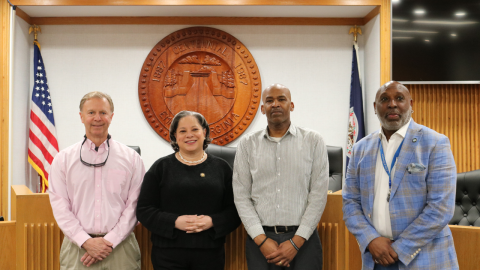
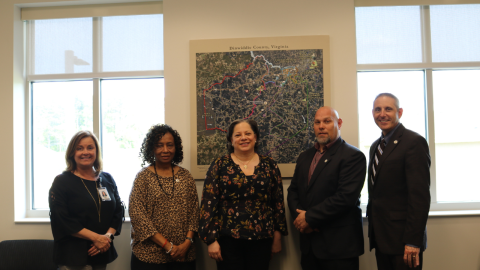
I participated in a roundtable discussion with community resource providers, faith leaders and advocates hosted by City Council Member Nicole Jones to discuss how the Trump Administration’s overly aggressive mass deportation campaign impacts families and communities in Southside Richmond. I also joined Henrico Board of Supervisor Chair Roscoe Cooper to give a legislative update at his Fairfield Forum.
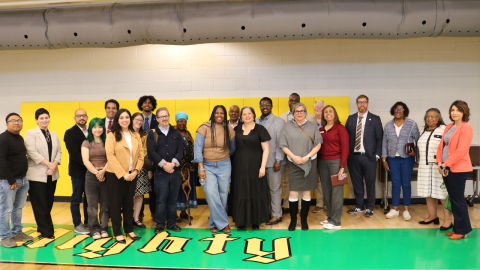
These conversations help keep constituents informed on how action or inaction in Washington impacts their lives, while helping me bring their perspective, priorities and concerns back to my colleagues.
ADDRESSING OUR HEALTH CARE CRISIS DURING MEDICAID AWARENESS MONTH, PUBLIC HEALTH WEEK AND BLACK MATERNAL HEALTH WEEK
April provides several opportunities to raise awareness about a variety of health care issues through Medicaid Awareness Month, National Public Health Week and Black Maternal Health Week. These commemorations occur this year in the wake of the Big Ugly Law’s drastic cuts to Medicaid, a significant source of federal funding for Virginia that provides health coverage to 1.4 million residents. Experts project that Virginia may lose up to $32.4 billion in funding to Medicaid and SNAP by 2034. Additionally, as the enhanced premium tax credits under the Affordable Care Act (ACA) expired in December, ACA enrollments in Virginia have already dropped by 44,000 people, with the number expected to grow to more than 100,000. On top of these cuts, Trump Administration cuts to funding and workforce at the Department of Health and Human Services have had devastating impacts on the health and access to care of millions of Americans.
During the April recess, I joined the leadership and staff of Health Brigade to discuss how federal funding and workforce cuts jeopardize their ability to provide vital care to the community. The oldest free and charitable clinic in Virginia that has served Richmond and surrounding counties for more than 50 years, Health Brigade has lost nearly $2 million dollars in federal funding since 2025. Their leadership fears for the future of their clinic and, more importantly, the patients who rely on Health Brigade’s services to get by. This meeting reaffirmed for me the situation caused by the Trump Administration’s attack on our public health safety net and the urgent need to change course.
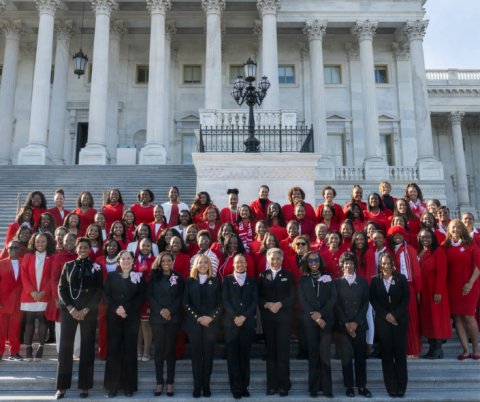
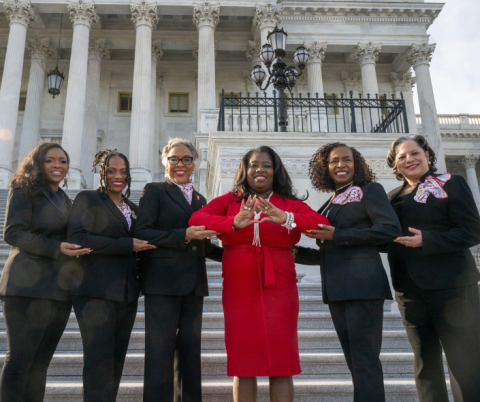
Back in Washington, we commemorated the 10th annual Black Maternal Health Week. This year’s theme, “Rooted in Justice and Joy,” reflects on the tireless work of maternal and reproductive health organizations while acknowledging the systemic inequities Black mothers still face.
Black women are 3 times more likely to die of pregnancy related causes than white women, despite 80% of these deaths being preventable. I outlined how the actions of the Trump Administration and Congressional Republicans have made the maternal health crisis worse, particularly for Black mothers nationwide in an interview on Mornings with Zerlina, a press conference led by Rep. Robin Kelly (IL-02) and virtual remarks at the annual Birth in Color Black Maternal Health Summit.
I also led a letter with Rep. Marilyn Strickland (WA-10) demanding answers to ensure the Department of Defense and the Defense Health Agency are providing military servicemembers with quality maternal health care in the Military Health System.
As a mom who nearly died in childbirth, I find the maternal health crisis to be more than just statistics. It’s personal, and I will continue fighting to end it.
ENERGY & COMMERCE UPDATE: MEETING RISING ENERGY DEMAND AFFORDABLY, QUICKLY AND CLEANLY
In an increasingly digital world in which the average household has 21 devices, the growing need to store and manage data files accessed and shared by consumer and business networks has led to a proliferation of data centers across the country. The rise of AI dramatically increases the amount of data generated, stored and accessed, dramatically increasing the need for data centers. As energy demands continue to rise, balancing our digital world’s need for data centers with the health and safety of our communities and ecosystems has become a critical priority. Moreover, ensuring that our electric grid is reliable and sustainable must remain paramount for our national security and prosperity.
Virginia stands as the data center capital of the world with more than 600 operating or in construction in the Commonwealth. While they have brought thousands of jobs and boosted tax revenues for localities, data centers use tremendous amounts of energy. Indeed, the data centers currently operating in Virginia use 3,583 megawatts of electricity, enough to power nearly 896,000 homes. Moreover, data centers may double Virginia’s energy demand over the next 10 years without legislative constraint. As the Energy & Commerce Committee grapples with how to meet exploding energy demand affordably and sustainably, I remain focused on a holistic energy policy that meets the moment and ensures consumers are not overburdened by the energy demand caused by data centers and AI.
Last week. I joined Axios Live in Washington for a conversation on how the data center boom has forced policymakers to rethink power costs and energy policy. I spoke with Axios Richmond reporter Sabrina Moreno about the impact of data centers and how local, state and federal governments must take action to ensure electric grid security, reliability and sustainability.
During an Energy Subcommittee hearing discussing the President’s proposed Department of Energy’s Budget for Fiscal Year 2027, I expressed my frustration with the Trump Administration’s failure to advance a coherent energy strategy that sufficiently meets the moment. I also questioned Secretary of Energy Chris Wright about how the proposed FY 2027 budget will harm American consumers and our grid’s security as President Trump’s war of choice in Iran sends fuel prices into the stratosphere.
MY BRIGHT SPOT: SHEDDING LIGHT ON RICHMOND’S OFTEN UNTOLD HISTORY
As we commemorate the 250th anniversary of the birth of our nation through the Declaration of Independence, the dichotomy of Virginia’s role as the birthplace of American democracy and the birthplace of American slavery cannot be overlooked. Unfortunately, for centuries, only one version of that history has been told. Many stories and historic sites were erased, buried and in some cases literally paved over. I attended two events recently that showcased these paved over sites.
On March 31st, I attended a ribbon cutting of the new Shockoe Institute exhibit “Expanding Freedom” at Main Street Station. The institute is dedicated to educating visitors on Richmond’s role in the transatlantic slave trade and its enduring impact. Scholars estimate that one in four Black Americans can trace some ancestry back to Richmond’s slave trade. This space provides a dedicated venue to learn about and reflect on this difficult history near the site of African burial grounds and Robert Lumpkin’s notorious slave jail known as “the Devil’s half acre.”
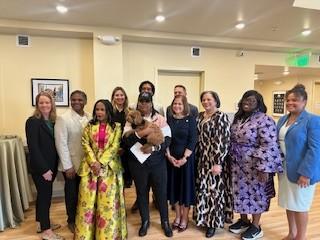
I also attended this past weekend the ribbon cutting of the JXN Haus and Skipwith-Roper Cottage in Historic Jackson Ward. Considered “the Founding Father of Jackson Ward,” Abraham Peyton Skipwith built a three-story cottage in Jackson Ward in 1793, becoming the first known Black homeowner there. Skipwith bequeathed the cottage to his descendants in 1799 and stayed in the hands of Black Richmonders until its last known owners were forcibly removed by eminent domain in the 1950s to construct Interstate 95. The cottage was moved to a nearby county, where its remnants continue to sit today on the former tobacco plantation of the Secretary of War for the Confederate Army. The JXN Project reconstructed the Skipwith-Roper Cottage in Jackson Ward as an environmentally sustainable structure with a research lab and library and headquarter offices.
Stay tuned for more updates and keep the faith, friends!