Dear Friends,
After former Anthropic employee Jacob Coxon went public with concerns that AI could “kill us all by the end of the decade” and more bleak messages from senior leadership at Anthropic and OpenAI sent AI stocks plummeting, the CEOs of Anthropic, OpenAI and xAI call for greater government oversight of frontier AI models. President Trump dismissed these concerns as a “conspiracy.” Yet experts have called for government oversight of AI development for a long time.
Last April, in an Energy & Commerce Committee hearing, Scale AI CEO Alexander Wang testified that we need to “keep humans at the center of all major [AI] advancements.” Dr. Eric Schmidt testified that:
“…policymakers cannot afford to wait. We must proactively grapple with its societal, economic, and ethical implications now. … Ensuring [Artificial General Intelligence] aligns with human values and is safeguarded against misuse — ensuring humans, not machines, remain in control, particularly regarding lethal systems — requires careful ethical frameworks, robust governance structures, and potential regulation focused on liability in extreme cases.”
Yet rather than taking those steps, the Energy & Commerce Committee advanced a bill last week that expands open-source AI without any guardrails to responsibly address not only the benefits, but the threats posed by AI. During the hearing, I outlined why that bill misses the mark.
I also joined Ali Vitali on MS NOW’s Way Too Early to discuss the need for AI regulation, why Congress seems asleep at the wheel and more.
There are several bills we could review or advance immediately, such as the bipartisan FRONTIER Act establishing the first comprehensive federal safety framework specifically targeting the development and deployment of the most advanced AI models. Senator Warner has also rolled out a comprehensive legislative agenda for AI.
Congress should examine every public policy and issue area to address how AI can be used as a tool for both good and harm. Instead, the House is now in recess through the midterm elections after Speaker Johnson canceled the last two weeks of session in September and sent the House home a day early to delay a vote on Rep. Thomas Massie’s resolution impeaching Secretary of Defense Pete Hegseth.
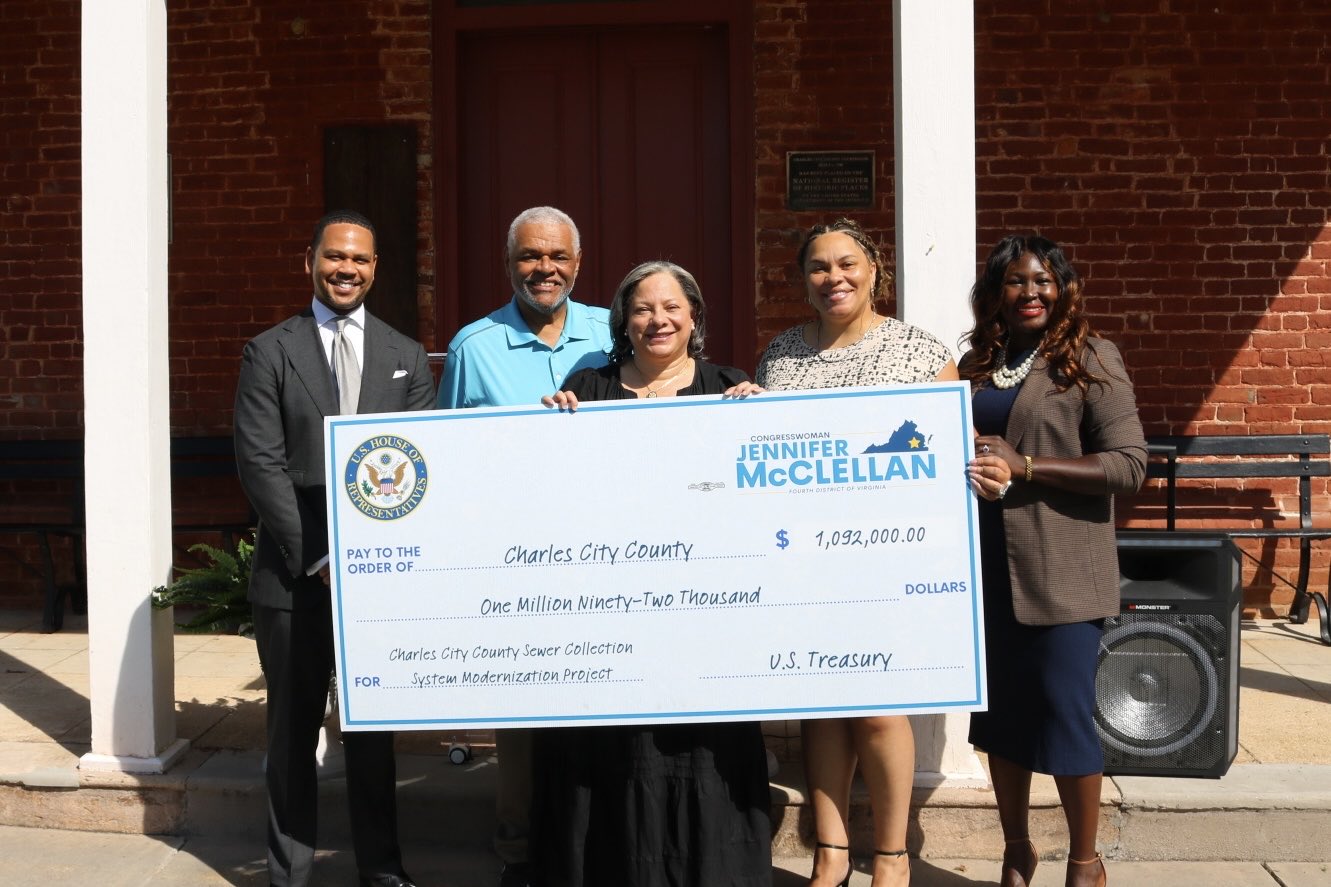
While in the district, I took the opportunity to visit Charles City County and deliver $1,092,000 for their sewer collection system modernization project, which would upgrade wastewater treatment plants and pumping stations to significantly reduce the risk of waterborne diseases and contaminants in local water systems.
Read on to see what else you may have missed since my last newsletter.
ADDRESSING THE RISING COST OF LIVING IN OUR COMMUNITIES
If you’ve been to a grocery store, gas station or bought pretty much anything over the past few months, you’ve probably noticed that prices have only gone up since Trump’s reckless war of choice in Iran and Republican policies that worsen the cost-of-living crisis.
All of that seems likely to get worse, as Canada’s dollar-for-dollar reciprocal tariffs on the U.S. took effect on September 8th, as a response to Trump’s senseless tariffs on Canada.
Last week, the House passed a Russia sanctions bill that included the largest transfer of tariff authority ever granted to a president by Congress, allowing the Trump Administration to launch 100% tariffs on any country it chooses without Congressional guardrails. I voted no.
In addition, Trump’s war of choice in Iran has cost at least $1,200 per household. With no end in sight, the House passed for the third time a War Powers Resolution to end the war and bring our troops home. I voted yes.
During the Labor Day recess, I joined Senator Tim Kaine for a roundtable discussion with Richmond Mayor Danny Avula, Virginia Secretary of Health and Human Resources Marvin Figueroa and others to discuss how the cost-of-living crisis has impacted housing, care providers and food insecurity — and what local, state and federal officials must do to address the cost-of-living crisis.
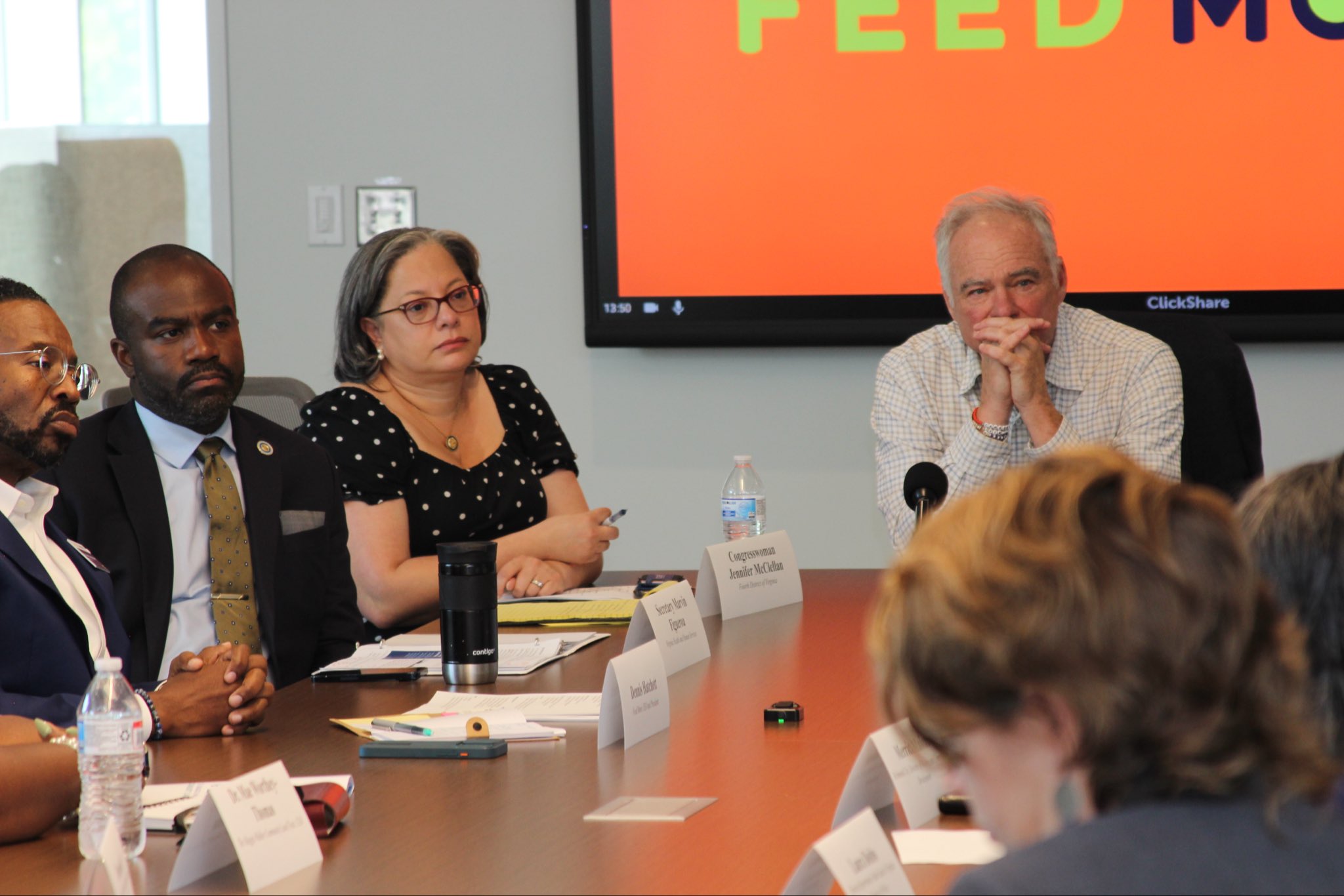
You can see news coverage of the roundtable here, here and here.
One thing remains clear: the American people demand economic relief, and they certainly didn’t ask for higher costs back in 2024 when Donald Trump secured his second term. I’m committed to amplifying their voices as I fight back against the Big Ugly Law and the Trump Administration’s policies that make this crisis even worse.
ENERGY & COMMERCE COMMITTEE UPDATE
The Energy & Commerce Committee had another busy week addressing issues from data centers to nuclear energy, health care and more.
On the floor, the House voted to pass the Ratepayer Protection Act and three other bills intended to ensure that data centers pay their fair share for their energy usage without shifting costs onto consumers and small businesses. As I said when the Energy & Commerce Committee advanced these bills, they take a crucial first step towards giving the federal government the tools it needs to mitigate the impact of existing and currently planned data centers, but they cannot be the last.
As the data center capital of the world, Virginia knows all too well the challenges of balancing our digital and energy needs without overburdening surrounding communities, the electric grid and the environment as the number of data centers grows more quickly than our current electric infrastructure can handle. To address these challenges, state regulators adopted a large-load customer rate for data centers, the General Assembly adopted the first-in-the-nation data center power tax and Governor Spanberger recently signed an executive order adopting data center accountability standards.
We need more action at the federal level. I will continue to push for more federal action to ensure greater transparency and regulation for data center projects; coordination between local governments siting these projects and state and federal energy and environmental regulators; that renewable energy sources and battery storage are brought online in a much more significant way to meet energy demand; and more.
The Health Subcommittee held a hearing to examine legislative proposals to reform Medicare provider payments and bolster health care cybersecurity. As hospitals across the country in rural communities close their labor and delivery units to cut costs, pregnant patients find themselves having to travel further and further to access the vital care they need, putting their lives and the lives of their babies at risk. During the hearing, I discussed how the Rural Obstetrics Readiness Act, which I cosponsor, can help expand access to that maternity care.
The Energy Subcommittee held a hearing to examine how to address spent nuclear fuel. During the hearing, I stressed the need to safely store nuclear waste as nuclear generation expands in the United States.
The full committee also advanced 16 bills from the Commerce, Manufacturing, and Trade Subcommittee and the Communications and Technology Subcommittee. These bills included bipartisan measures to study a shortage of memory chips and the influence of Chinese manufacturers and suppliers in our domestic auto supply, ensuring funding from the CHIPS and Science Act reaches American companies and allies, not adversaries. It also included several bipartisan consumer protection bills preventing deaths from nitrous oxide products and protecting consumers from scams and ticketing bots; reforming the FCC’s satellite licensing process; closing the digital divide; and studying the role AI can play in the security of communications infrastructure.
MY BRIGHT SPOT: CELEBRATING AFRICAN DIASPORA MONTH
Happy African Diaspora Month! As a state senator, I championed legislation making Virginia the first state in the nation to designate September as African Diaspora Month. Now in Congress, I’m sponsoring legislation to do the same nationwide.
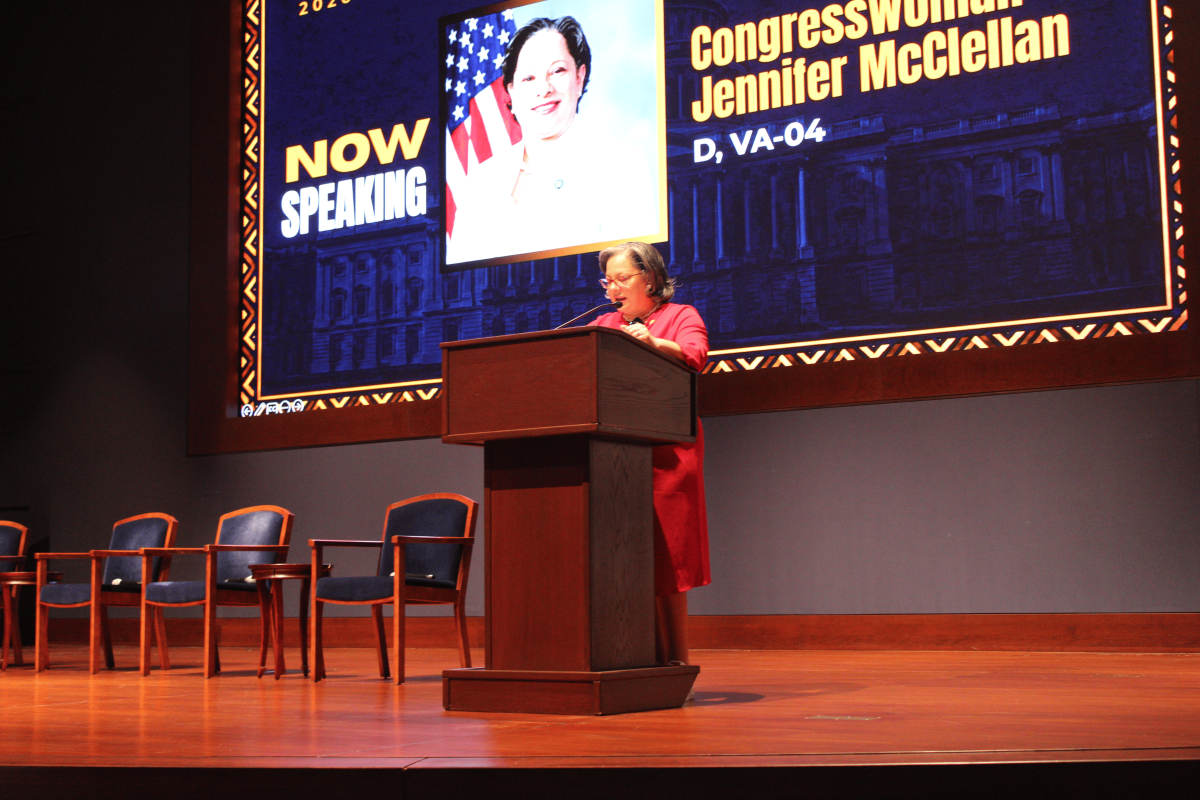
Last week, I co-hosted the third annual African Diaspora Day on the Hill, bringing people from across the country to Washington to celebrate the rich history, heritage and contributions of the African diaspora and discuss building the next strategic trade corridor.
This year’s theme, “Global Africa: Building the Next Strategic Trade Corridor,” recognizes tremendous momentum across Africa as countries build the infrastructure, industries and systems that will power Africa’s growth and the global economy. I shared with attendees that as the world becomes increasingly isolationist, Congress must approach Africa not simply through the lens of aid, but through the lens of partnership, investment, trade and shared opportunity. To strengthen our relationship with Africa, we must also recognize the critical role of the African diaspora.
The African diaspora remains one of our nation’s greatest strategic assets. Since the first Angolans arrived at Point Comfort, Virginia in August 1619, the African diaspora has brought a depth of culture, traditions and history that enrich Virginia, which today hosts one of the largest African diaspora communities in the country. In Virginia and nationwide, the contributions of the Diaspora have strengthened our local economies and communities. To build stronger U.S.-Africa partnerships, greater opportunity and a more competitive global economy, the diaspora must have a seat at the table.
ANNOUNCEMENTS AND REMINDERS
Youth Advisory Council: Applications are now open for the 2026-2027 Youth Advisory Council (YAC)! Comprised of high school students residing or attending school in Virginia’s Fourth District, the YAC meets monthly with members of my staff to learn more about the legislative body, communications, constituent casework and district outreach. The students will also work on a policy project that they will share with me during the last meeting of the year.
Students interested in applying to my Youth Advisory Council can do so using this link. Applications are due October 2nd at 11:59PM! You can find more information here.
Congressional App Challenge: Applications are open for the 2026 Congressional App Challenge. Middle and high school students living in the district can submit an original software app written in any programming language for a chance to have the work officially recognized, meet me and attend the annual #HouseOfCode science fair in Washington, D.C.! Submissions are due October 26th, and more information can be found here.
Stay tuned for more updates and keep the faith, friends!